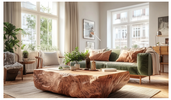
Sustainable Materials: Eco-Friendly Alternatives for Luxury Interiors
, by Theodora Martinou, 8 min reading time
, by Theodora Martinou, 8 min reading time
Sustainable materials are transforming interior design, offering ways to create beautiful, tactile spaces with greater consideration for environmental impact. For designers and homeowners, the opportunity lies in combining material innovation with timeless aesthetics, practical performance and thoughtful sourcing.
From responsibly sourced timber to recycled surfaces and lower-emission finishes, the right choices can shape how a room looks, feels and functions. However, a material is not automatically sustainable because it is natural or recycled. Its origin, manufacturing process, durability and eventual disposal all matter.

Materials influence a space long after installation. Their production and transportation affect environmental impact, while finishes can influence indoor air quality. Durability, repairability and reuse also determine how frequently products need replacing.
A considered approach looks beyond appearance. It asks whether a material suits its intended use, whether its environmental claims are supported and whether it will remain useful for years to come.
Bamboo offers a distinctive grain and a contemporary alternative to some conventional timber applications. It works well in flooring, furniture and decorative detailing, bringing warmth to minimalist, coastal and nature-inspired interiors.
Its rapid growth can be an advantage, but sustainability depends on responsible cultivation, processing, adhesives and transportation.
Design tip: Combine bamboo with linen upholstery, muted stone and woven accents for a layered, organic palette.
Harvested from the bark of cork oak trees without felling them, cork can offer a renewable option for flooring and wall finishes. Its natural texture and cushioning qualities make it particularly appealing in residential spaces and selected commercial interiors.

Choose products suited to the room's moisture levels, traffic and maintenance requirements.
Design tip: Use cork on a feature wall or beneath a desk to introduce subtle texture and help soften sound in a hard-surfaced room.
Recycled glass can be incorporated into tiles, decorative panels, countertops and composite surfaces. Depending on the product, its varied fragments create distinctive patterns that bring depth and visual interest to contemporary interiors.
The environmental benefits depend on recycled content, binders, manufacturing energy and expected lifespan.
Design tip: Let a recycled-glass surface become a focal point against understated cabinetry, warm timber and softly textured walls.
Paint is one of the most visible materials in a room, yet its composition is often overlooked. Water-based paints with verified low volatile organic compound (VOC) emissions can help reduce certain indoor air pollutants.
Other options include clay-based finishes and limewash, depending on the substrate, desired appearance and maintenance needs. Natural formulations are not automatically emission-free, so check product documentation.
Design tip: Soft mineral tones, warm whites and muted earth colours create a versatile backdrop for sculptural furniture and natural textures.
Reclaimed timber gives existing materials another life, often bringing grain, patina and character that new finishes cannot replicate. Reuse can reduce demand for virgin resources, provided the timber is suitable for its intended application.
Linen, hemp and jute can also introduce tactile contrast through upholstery, rugs and decorative accessories. Their environmental credentials vary with cultivation, processing, dyes and transport.
Design tip: Pair reclaimed timber with simple linen upholstery and carefully selected woven accessories. Keep the palette restrained so the materials remain the focus.
Successful interiors rely on balance rather than filling every surface with natural finishes. Combine contrasting textures, consider how daylight moves through the room and select materials according to their practical demands.
For example, a living room might bring together timber furniture, a cork accent wall, linen cushions and a recycled-glass accessory. Warm neutral walls connect the different elements without making the scheme feel overly rustic.
In hospitality and commercial interiors, performance becomes equally important. High-use surfaces need suitable resistance to wear, straightforward maintenance and access to repair or replacement where possible.
Before specifying a product, ask five questions:
Origin: Where was it sourced, and can responsible sourcing be verified?
Composition: What binders, coatings, dyes or treatments does it contain?
Performance: Will it withstand the demands of its intended setting?
Longevity: Can it be maintained, repaired, reused or recycled?
Evidence: Are environmental claims supported by credible documentation?
Certifications and environmental product declarations can help, although their scope and criteria should be checked rather than assumed.
For bespoke interiors, thoughtful specification can also reduce unnecessary waste. Accurate measurements, appropriate quantities and adaptable furniture help avoid premature replacement and excess material use.
There is no universal winner. Reclaimed timber, cork, bamboo, recycled glass and responsibly sourced natural fibres can all be suitable, depending on their composition, production and intended use.
No. Farming practices, processing, transport, finishes and durability all affect environmental impact. Look for evidence rather than relying on labels alone.
It can be, particularly when responsibly grown and processed. However, the comparison depends on sourcing, manufacturing, adhesives, transportation and product lifespan.
It refers to paint formulated to contain relatively low levels of volatile organic compounds. Check verified emissions information, as VOC content and actual emissions are not identical.
Prioritise lasting design, durable materials, responsible sourcing, repairable furniture and finishes suited to their use. Quality and longevity can help reduce unnecessary replacement.
Sustainable interior design is not about following a fixed list of approved materials. It is about making informed decisions that balance aesthetics, performance and environmental responsibility.
At Irregular Lines, thoughtful curation and individuality offer a starting point for interiors that feel personal rather than disposable. Explore our furniture and décor collections for considered finishing touches, or discover residential interior design for a more tailored approach to creating spaces with lasting character.
Subscribe to our emails