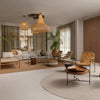
Learn How to Layer Furniture Heights for Depth
, by Theodora Martinou, 6 min reading time
, by Theodora Martinou, 6 min reading time
Learn how layering furniture heights adds depth, balance and character to residential interiors and boutique hotel spaces.
Furniture heights can transform how a room feels. When every piece sits at a similar level, an interior may appear flat. Varying heights introduces movement, creates visual depth and makes a space feel more naturally composed.
For residential interiors and boutique hotels, the secret is not adding more furniture. It is arranging selected pieces so that each contributes to the overall composition.
Begin with the largest furniture pieces. Sofas, beds, dining tables and consoles establish the room's main visual levels.
These pieces should suit the architecture and leave enough space for comfortable movement. Once their positions are established, introduce smaller furniture and accessories.
A low sofa can feel more balanced beside a taller floor lamp. A substantial dining table can be complemented by a pendant that defines the area overhead.

Think of a room as a composition of different heights.
Low furniture creates a relaxed foundation. Medium-height tables, consoles and occasional chairs provide transitions. Taller lamps, shelving and decorative elements draw the eye upwards.
Avoid placing every tall object against the same wall. Distribute visual weight throughout the room to create a more balanced arrangement.
In boutique hotel lounges, this approach can help distinguish seating zones without introducing unnecessary partitions.

Lighting adds another dimension to furniture layering. Table lamps create intimate pools of light, while floor lamps introduce height beside sofas and armchairs.
Pendant lights can draw attention to dining tables, reception counters or selected architectural features.
Explore the Irregular Lines pendant lighting collection for designs that introduce form and texture overhead.
Choose each light according to its purpose. Decorative lighting should complement the room without obstructing sightlines or overwhelming the furniture below.
Height works best when combined with variation in shape and texture. A tall woven pendant can contrast with a low timber coffee table. A sculptural vase can soften a straight-lined console.

Natural materials bring additional visual interest. Timber, rattan, ceramics and textiles each respond differently to light and surrounding surfaces.
Keep the palette connected. Repeating a material in different parts of the room creates cohesion, even when furniture heights vary.
Not every surface needs an accessory. Empty space allows distinctive furniture and lighting to stand out.
Avoid placing tall objects behind every seat or filling every console with decorative pieces. Instead, alternate areas of visual activity with quieter spaces.
For residential projects, this creates a more relaxed atmosphere. In hospitality settings, it also supports clear circulation and practical use.
For a broader approach to spatial composition, explore IL Projects' residential interior design work.
Why do different furniture heights matter?
They create visual movement and prevent an interior from feeling flat or repetitive.
How do I layer furniture heights in a living room?
Start with the sofa and coffee table, then introduce taller lamps, occasional furniture and selected accessories.
Should furniture heights match?
No. A considered mix often creates more depth, provided the proportions remain balanced.
Can layering work in small rooms?
Yes. Use a few contrasting heights rather than adding numerous pieces that crowd the space.
How does lighting affect furniture layering?
Lighting draws attention to different levels and helps establish focal points throughout the room.
Does this technique work in boutique hotels?
Yes. It can distinguish seating areas, add character and create a more inviting guest experience.
Layering furniture heights is a simple way to make an interior feel more considered. Begin with the essential pieces, introduce contrasting levels and use lighting to connect the composition. The result should feel balanced rather than arranged, with enough variation to create interest and enough space to let each piece breathe.
Subscribe to our emails